Have you noticed a suspicious lean in your side boundary lately? Or perhaps you’ve touched one of your fence posts only to find the wood feels soft and spongy? If you’re a Melbourne homeowner, you’re likely all too familiar with the battle against wood rot. At Easy Love Fencing, we’ve spent over 15 years on the tools, and if there is one thing we know, it’s that the Melbourne climate is a relentless opponent for any timber structure.
From the damp, bone-chilling winters in the Dandenongs to the scorching UV-heavy summers in the Northern Suburbs, your fence is under constant biological attack. But here is the good news: rot isn’t inevitable. With the right materials, a solid foundation, and a bit of professional “know-how,” you can ensure your timber fencing in Melbourne lasts for 20 to 30 years rather than five.
In this guide, I’m going to share the professional secrets we use every day to keep fences standing tall and rot-free.
About the Author: 15 Years of Melbourne Grit
This guide is written by the lead team at Easy Love Fencing. We aren’t just writers; we are licensed Victorian contractors who have dug thousands of post holes across every soil type Melbourne has to offer. From the heavy basalt clay of Werribee to the sandy loams of Frankston, we understand how local conditions affect timber longevity. Our expertise is built on practical, hands-on experience and a deep commitment to Australian building standards.
Last Updated: January 2026
1. Understanding the Enemy: What Causes Rot?
Before you can stop rot, you need to know what it is. Rot is caused by fungi that feast on the cellulose in wood. These fungi need three things to thrive: moisture, oxygen, and the right temperature. In Melbourne, we provide all three in abundance.
There are two main types of rot we see:
- Wet Rot: Usually occurs at the base of the fence where the wood meets the damp soil or sits in a pool of water.
- Dry Rot: Despite the name, it still needs moisture. It’s a more aggressive fungus that can spread through the timber panels, often hidden behind a coat of old paint.
2. Start with the Right Stuff: H3 vs. H4 Treated Pine
The most critical decision for your timber fencing in Melbourne happens before the first hole is even dug. It’s all about the treatment grade.
At Easy Love Fencing, we exclusively use Australian-made Treated Pine. But not all treated pine is equal:
- H3 Treatment: This is designed for “above-ground” use. It’s perfect for your fence palings and rails. It resists termites and decay but shouldn’t be buried in the dirt.
- H4 Treatment: This is the heavy-duty stuff designed for “in-ground” contact. We use H4 treated timber for our post holes and sleepers. If an installer tries to use H3 posts to save a few bucks, your fence will likely rot at the ground line within a few years.
3. The Secret Weapon: The Plinth Board
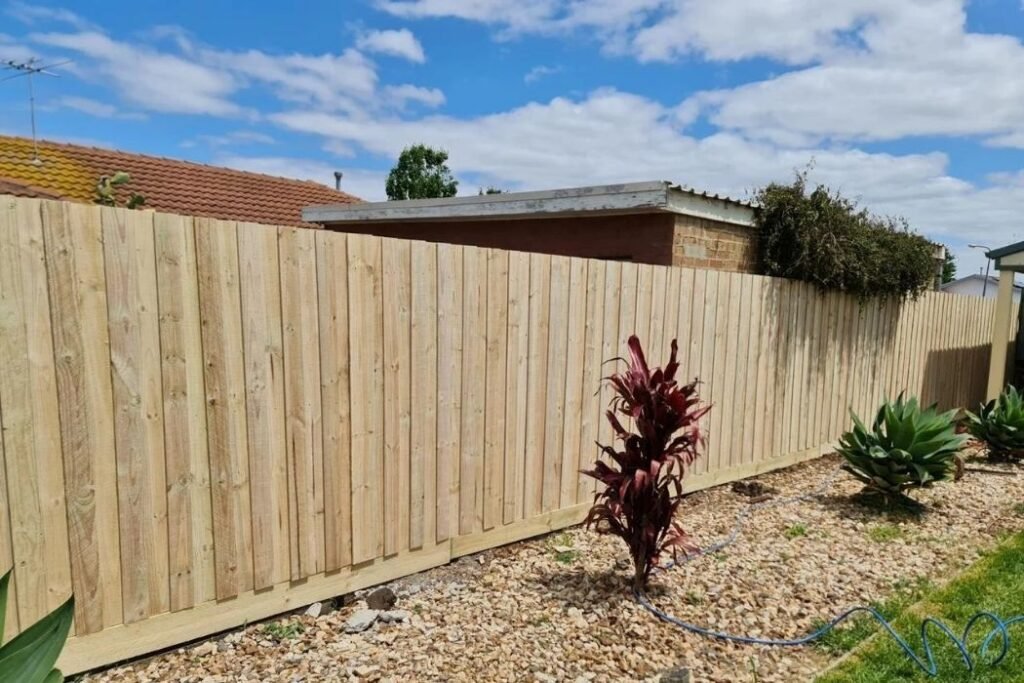
If you want to spot a professional fence from a mile away, look at the bottom. A pro-grade fence will have a plinth board running along the ground.
Why it matters: The plinth board acts as a sacrificial barrier. It takes the brunt of the moisture from the soil and wet grass, keeping your vertical palings high and dry. It’s much cheaper and easier to replace a single plinth board in ten years than it is to replace an entire run of rotted palings.
4. Engineering Stability: Post Holes and Concrete Footings
The most common place for a fence to fail is right at the ground level. Water often runs down the post and gets trapped in the gap between the wood and the concrete.
The Easy Love Method:
- Deep Post Holes: We dig a minimum of 600mm deep. In reactive Melbourne clay, this ensures the post stays stable even as the ground swells and shrinks.
- Concrete Footings: We don’t just “dry mix” and hope for the best. We ensure high-strength concrete is poured and, most importantly, “crowned” at the top.
- The Crown: By sloping the top of the concrete away from the timber post, we ensure that rainwater sheds away rather than sitting in a puddle against the wood.
5. Drainage: The Silent Savior of Fences
In my 15 years in the industry, I’ve seen beautiful fences destroyed because the homeowner didn’t consider water flow. If your yard or your neighbor’s yard slopes toward the fence, you have a problem.
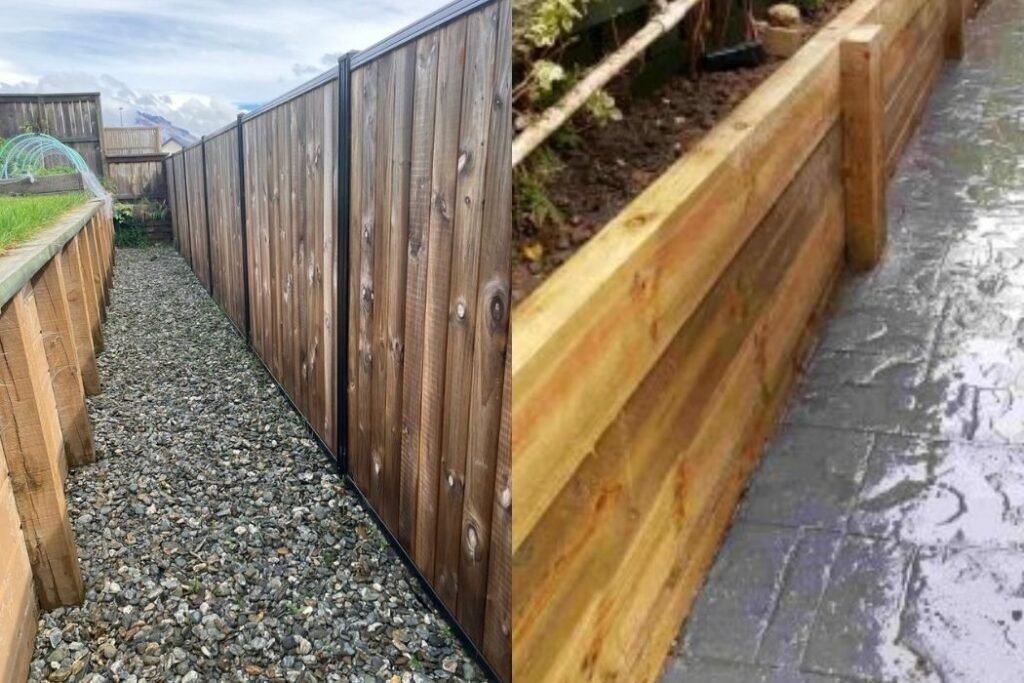
For properties with heavy water runoff, we often recommend incorporating a small retaining wall using concrete sleepers at the base of the fence. Unlike timber, concrete sleepers are immune to rot. We also install Ag-pipe (agricultural drainage pipe) wrapped in geofabric and gravel backfill to move water away from your fence line.
6. Fighting the UV: Maintenance and Sealing
Melbourne’s sun is brutal. High UV-resistance is something timber naturally lacks. The sun’s rays break down the lignin in the wood, causing it to crack. Once the wood cracks, water gets deep inside, and the rot begins.
Pro Maintenance Tips:
- Stain or Oil: Apply a high-quality UV-rated oil or stain every 2 to 3 years. This keeps the wood supple and water-repellent.
- Clear the Debris: Don’t let wet leaves or mulch pile up against the bottom of your fence. This creates a “moisture bridge” that bypasses the treatment and invites rot.
- Fix Leaning Posts Early: A leaning fence creates gaps where water can enter. If a post is failing, call us at 0411 463 574 to fix it before it brings the whole boundary down.
7. Our Professional Work Process
When you hire Easy Love Fencing, you’re getting a team that follows a rigorous quality control process to prevent rot before it starts.
- Step 1: Site Consultation & Free Quote: We assess your soil type, drainage needs, and slope. We provide an honest, transparent quote.
- Step 2: Site Preparation & Old Material Removal: We remove your old, rotted fence and clear the line to ensure the new timber has plenty of “breathing room.”
- Step 3: Professional Installation: We set H4 posts in deep concrete footings, install rails, and add plinth boards to create a rot-resistant structure.
- Step 4: Final Inspection & Site Cleanup: We check every capping and nail. We leave your yard spotless—no offcuts, no mess.
8. Cost Estimation: Investing in Longevity
While a “budget” fence might save you money today, a rot-resistant fence saves you thousands over its lifetime.
- Standard Timber Fencing: Typically ranges from $85 to $120+ per meter depending on height and site conditions.
- Premium Lapped and Capped: Around $110 to $150 per meter, providing extra thickness and protection against the elements.
Remember, factors like Melbourne’s notorious “rocky ground” in the West or steep slopes can affect the labour cost, but we always provide a fixed quote so there are no surprises.
9. Why Choose Easy Love Fencing?
We are more than just “fence builders.” We are specialists who understand the Victorian landscape.
- Fully Insured & Licensed: We are professional Victorian contractors who stand by our work.
- Australian-Made Materials: we use premium BHP steel for our Colorbond jobs and high-grade Australian treated pine for our timber projects.
- Local Experts: Servicing all suburbs across Melbourne, from the North to the South East.
- Spotless Cleanup: We treat your property with the respect it deserves.
10. FAQ: Everything You Need to Know About Fence Rot
Q: Do you handle insurance claims for storm damage?
A: Yes. If a storm has brought down your rotted fence, we can provide a formal quote for your insurance company and prioritize the repair to keep your property secure.
Q: Can I just paint over rotted wood to stop it?
A: No. Painting over rot is like putting a band-aid on a shark bite. It actually traps the moisture inside and accelerates the decay. You must cut out and replace the rotted sections.
Q: How deep do you dig the post holes?
A: For standard residential timber fencing in Melbourne, we go 600mm deep. For corner posts or ends, we often go deeper to provide extra leverage against the wind.
Q: Does the Fences Act 1968 cover rot repairs?
A: Yes. Generally, neighbors are required to split the cost of repairing or replacing a shared boundary fence that is no longer “sufficient” due to rot or damage.
Ready to Upgrade Your Property?
Don’t wait for your fence to become a safety hazard. Whether you need a brand-new timber fence, a sleek Colorbond boundary, or a sturdy concrete sleeper retaining wall, our team is ready to help.
Contact the experts at Easy Love Fencing today for a free measure and quote. Let’s build a boundary that stands the test of time and the Melbourne weather.
- Call us: 0411 463 574
- Email: info@easylovefencing.com / Easylovefencing@gmail.com
- Service Area: Servicing All Areas of Melbourne, VIC
Contact the experts at Easy Love Fencing today for a free measure and quote. Call us at 0411 463 574 or email
Privacy & Disclosure: This content is provided for informational purposes based on 15+ years of professional experience at Easy Love Fencing. Every property is different; always consult with a licensed contractor for a specific site assessment and to ensure compliance with the Fences Act 1968 and local council regulations.